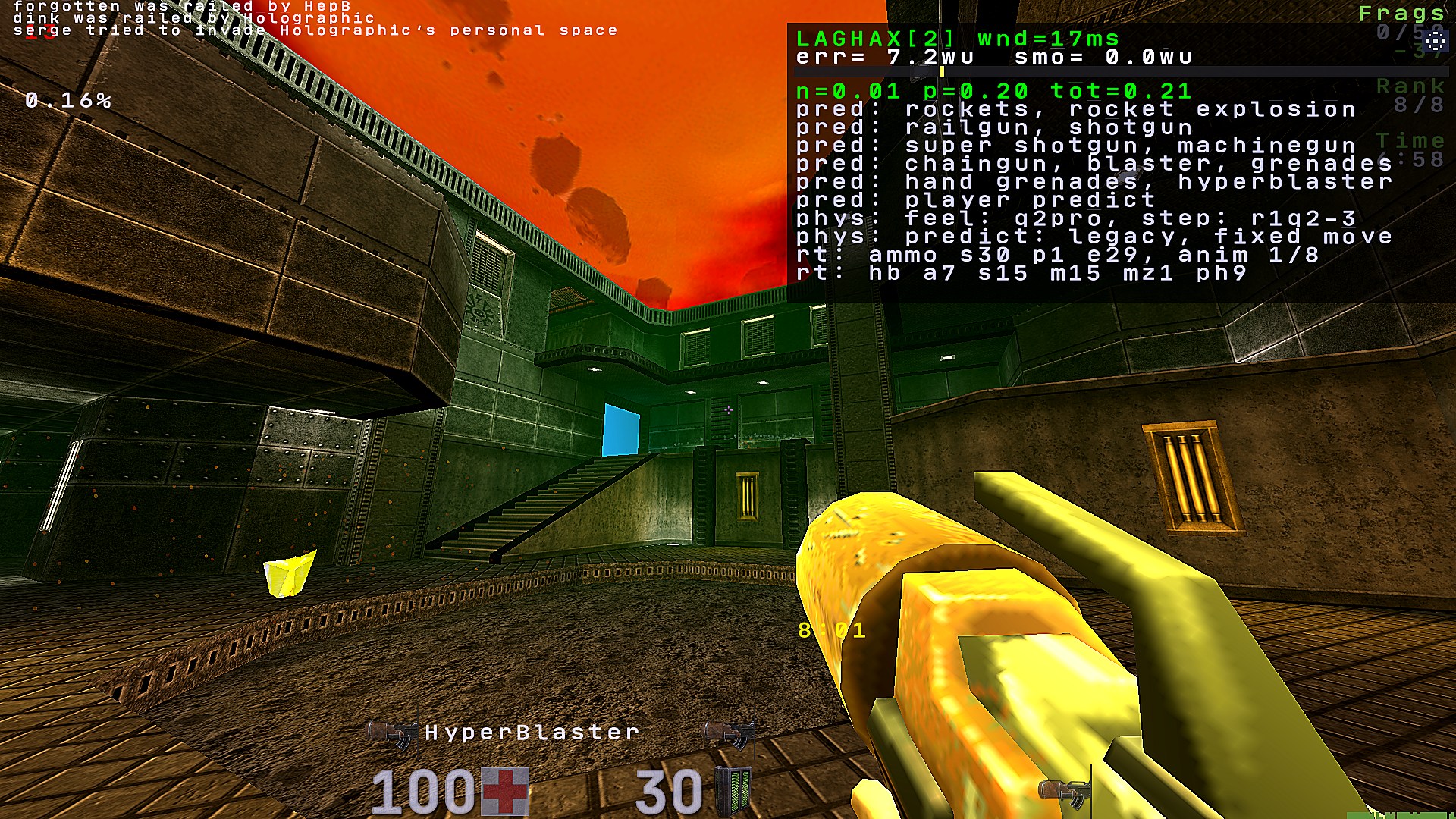
A player might own a new computer and a very old configuration file. They knew how the mouse should move, where the weapon should appear and exactly where to start a familiar jump. Once the source became available, building a custom Quake II client was possible; persuading that player to switch was harder. The new executable had to coexist with their maps, mods and settings. Even a useful correction could become a nuisance if a movement they knew suddenly stopped working.
R1Q2 and its renderer, R1GL, concentrated on performance and security. The server had to withstand the demands of network play; the client had to avoid unnecessary delay. EGL, AprQ2 and Q2PRO developed alongside them, and successful changes travelled between projects. AprQ2's documentation explicitly acknowledges borrowing networking work from Q2PRO. Old clients did not vanish on command when a new one appeared: different players chose different versions and continued meeting on the same servers.
Q2PRO also has a history reaching back to the early 2000s: a surviving FAQ thread was opened in January 2004. Even the early descriptions show an interest in MVD, or multiview demos. An ordinary client recording preserves the data stream available to its recorder. A server MVD lets viewers examine a match from different perspectives and follow the contest beyond a single camera. For spectators, it is convenient; for analysis, it is a way to check what an opponent actually had, where they were and why they reached a crucial position first.
Over time, Q2PRO accumulated a broad range of networking and user features: multiple protocols, traffic compression, asynchronous client operation, an OpenGL renderer and extensive demo-viewing tools. Asynchronous operation meant that drawing frames and sending commands did not have to run at the same rate. But a high frame rate cannot, on its own, eliminate server or network delay. A good client must coordinate several clocks: input, physical movement, network commands and rendering. A mistake where they meet can feel like a sluggish mouse or a late shot even at high FPS.
Q2PRO became the foundation of Q2PRO-X. R1Q2 remained a useful point of comparison: people brought their settings and expectations from it. When the mouse behaved differently in the two clients, the investigation followed command formation and input delivery. Changing the physics would have been risky—the client could have begun moving differently from the server's calculations. The similar names conceal two distinct relationships: code inherited from Q2PRO, and continual comparison with the experience players knew from other clients.
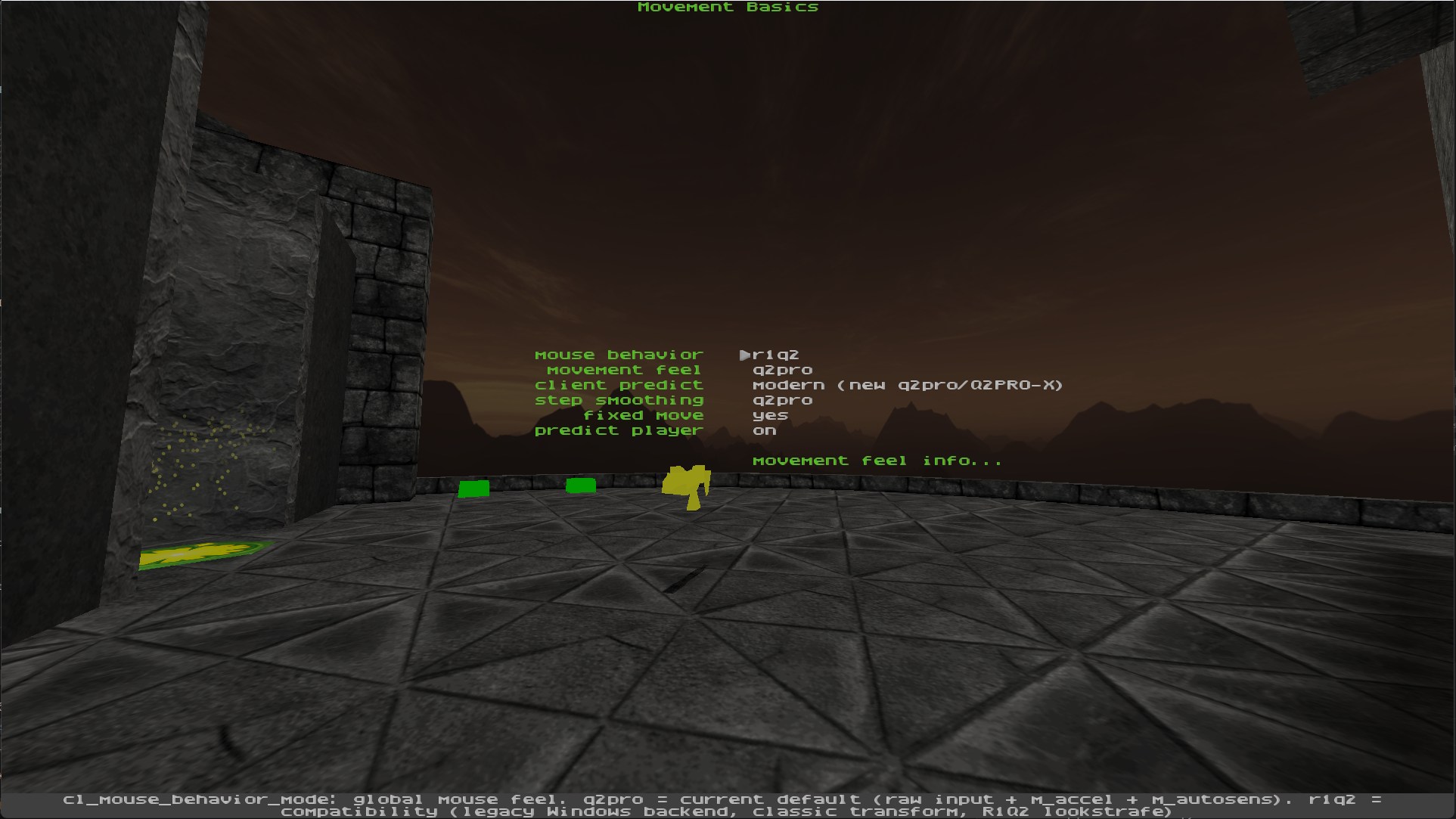
Quake II found other ways to continue its technical life. Yamagi Quake II developed convenient support for the classic game on modern systems, while projects with new renderers explored lighting and imagery. An official enhanced edition arrived in August 2023. None of these developments erased the classic online environment: servers, mods, client configurations and demos still formed their own web of compatibility. Q2PRO-X began within that environment in spring 2026. The task was to develop a long-familiar game while allowing people to bring their existing installations and habits, rather than start again.