Little remained of its predecessor's medieval castles in Quake II. The player arrived on the Strogg's industrial planet: factory interiors, a military landing, heavy music and bodies grafted to machinery. Several maps formed a larger section of the campaign. Completing a task in one place could open a route elsewhere, so a familiar corridor sometimes had to be visited again after something had changed. The name promised a continuation of Quake, but the game was choosing its own structure and appearance.
Quake II had to remain recognisably the same game on a machine with a graphics accelerator and one using software rendering. Coloured lighting, transparent surfaces and moving models had to be drawn quickly in both cases. Rendering, network communication and the game module were separate parts of the engine later called id Tech 2. A few years on, that arrangement would allow one part—the renderer or the rules of a match—to be replaced while keeping the rest. At the time, the separation helped assemble a single game from parts that each presented plenty of difficulties of their own.
Q2 Test became available on 19 October 1997. The game was still being made, yet an early version had already left for other people's computers. The development diary for that day records a dilemma familiar to anyone who has prepared a software release: a program changes daily, and the ideal moment—ready to test, with nothing left to fix—never arrives. You have to choose a day and let people try it. A full demo was promised later, after the retail release was finished. For now, Q2 Test offered a first encounter with the future Quake II and showed its developers how the game behaved outside the studio.
As the test spread to other machines, the list of fixes kept growing: sound, input, saves, installation and network prediction. Some bugs stopped the program; others let people play but spoiled movement or shooting. The retail release in December carried the number Quake II 3.05, and updates followed almost immediately. Remnants of the test could interfere too: an old Q2 Test game-module library could prevent startup if the program found it before the new file. Sometimes getting a working game began with sorting out its folder.
Network play was part of Quake II from the beginning. In deathmatch, players appeared at different points, collected weapons and returned to the fight after dying. The rules were simple; the weapons soon made their application complicated. A railgun demanded a precise hit and left a pause between shots. A rocket took time to reach its target and could hurt an opponent with its blast. A grenade bounced off walls, while a chaingun needed to spin up and consumed ammunition quickly. Tactics grew out of these differences: choosing a favourable range, claiming the upper floor or forcing an opponent into a narrow passage could provide an advantage before the first hit.
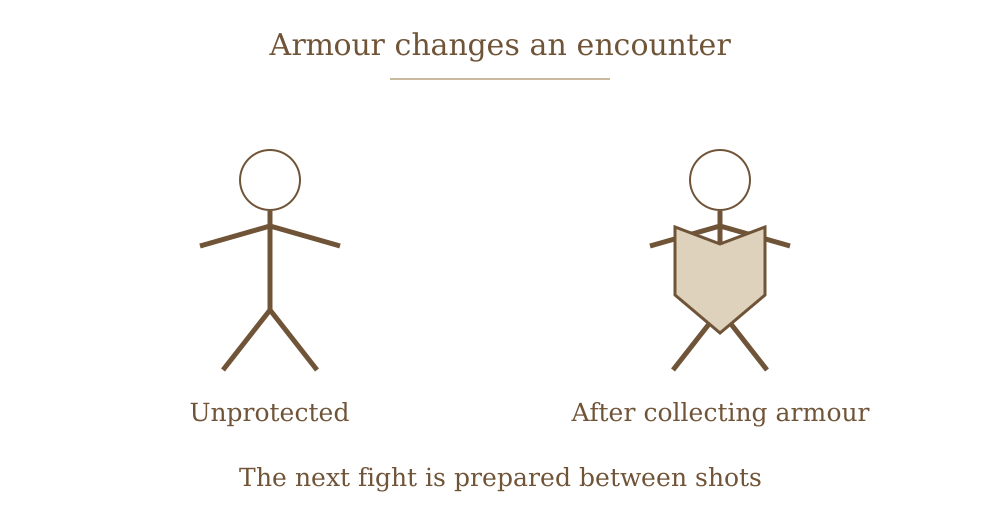
A large stack—health and armour—let you survive a mistake, but you had to earn it. Items occupied fixed positions, and armour respawning became an event you could prepare for. This was how the skill of control developed: remember a pickup, estimate its return and prevent an opponent from approaching for free. On screen, it might look like a brief meeting in a corridor. Behind it lay several earlier decisions: where to go after spawning, which weapon to save and from which direction to reveal yourself.