The familiar Quake II package took shape after the game was released. The multiplayer maps are an easy part of that history to forget: deathmatch was in the December version, but the eight purpose-built levels, q2dm1–q2dm8, arrived in Quake II Point Release 3.12 on 19 February 1998. Before that, people played on suitable parts of the campaign and on community maps. The new arenas changed how players encountered Quake II. A level no longer had to serve a story objective; it could be built around encounters, weapon distribution and the struggle for advantageous positions.
Patches followed one another. The Quake II 3.13 readme warned that old saves would not work and servers predating Quake II 3.12 would be incompatible. Behind that short note were the familiar chores of a player: find out what everyone else has installed, locate the right update and preserve the files that matter. Meanwhile, the developers tackled crashes and problems with sound, cooperative play and networking. People had already bought Quake II and were playing it while its multiplayer side was still changing.
| Date | Major releases |
|---|---|
| October–December 1997 | Q2 Test; retail Quake II 3.05; early fixes in Quake II 3.06 and Quake II 3.07. |
| 19 February 1998 | Quake II 3.12: eight dedicated DM maps; Q2CTF 1.0 released. |
| 25 February–2 March 1998 | Quake II 3.13 and Quake II 3.14; further fixes and CTF updates. |
| May–July 1998 | Quake II 3.15 and Quake II 3.17; continued engine and platform support. |
| Autumn 1998 | The Quake II 3.19 and Quake II 3.20 lines, which became landmarks in the history of the classic game. |
| December 2001 | Engine source code released under the GPL. |
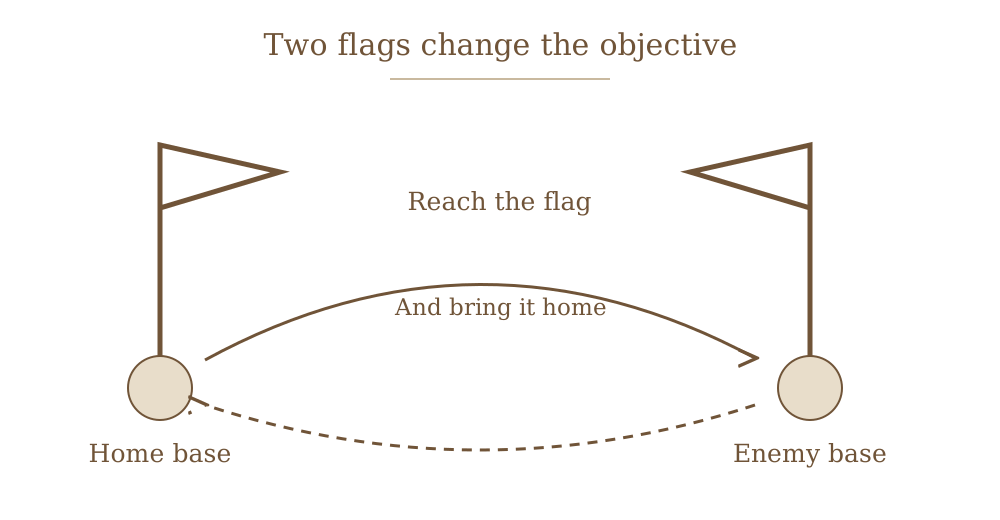
In CTF, the familiar map served a different task: bring home the enemy flag and protect your own. Chasing a personal frag could cost the team a win, while knowing a side route and helping a teammate could save the match. Rocket Arena 2 concentrated on duels in separate arenas. Action Quake 2 introduced different weapons and its own combat rules. After ordinary deathmatch, players had to learn to judge a situation afresh: the walls and controls were familiar, but the reasons to advance, wait or retreat had changed.
A tournament brought demands absent from a casual firefight. Players needed a warmup, an agreed start, the correct teams and equal conditions. Competitive mods took on those duties, including OSP Tourney DM from Orange Smoothie Productions. By spring 1999, it was receiving updates and versions that worked with Gladiator. OpenTDM would later develop this side of the game further. The client displayed the match; the server mod organised it and enforced its rules.
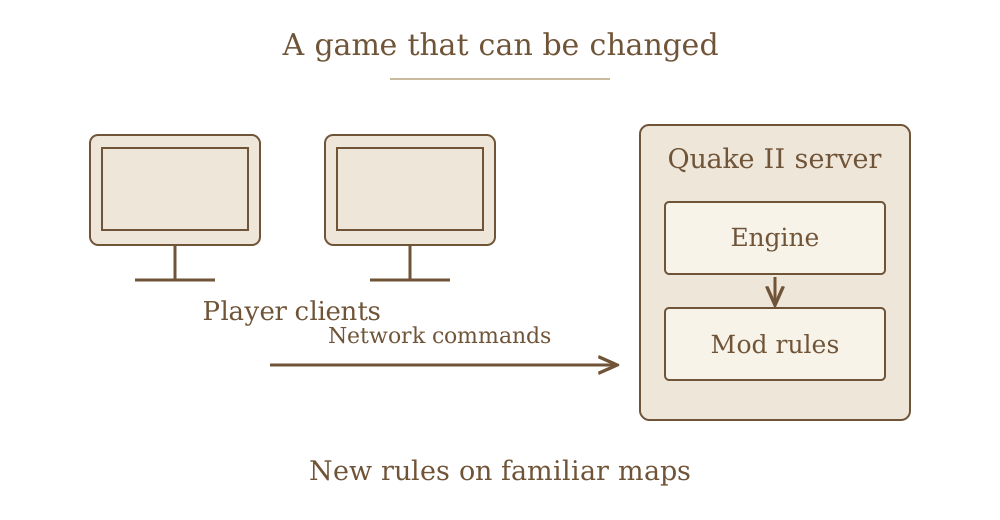
Mods could change weapons, teams and match rules without rewriting the client: the game-module source was available in Quake II's early years. In December 2001, the engine was released under the GPL as well. The commercial game's maps, models, textures and sounds did not become free as a result. The newly available code did, however, allow people to maintain their own clients and servers, port them to other systems and fix bugs years after id Software's main work was over.