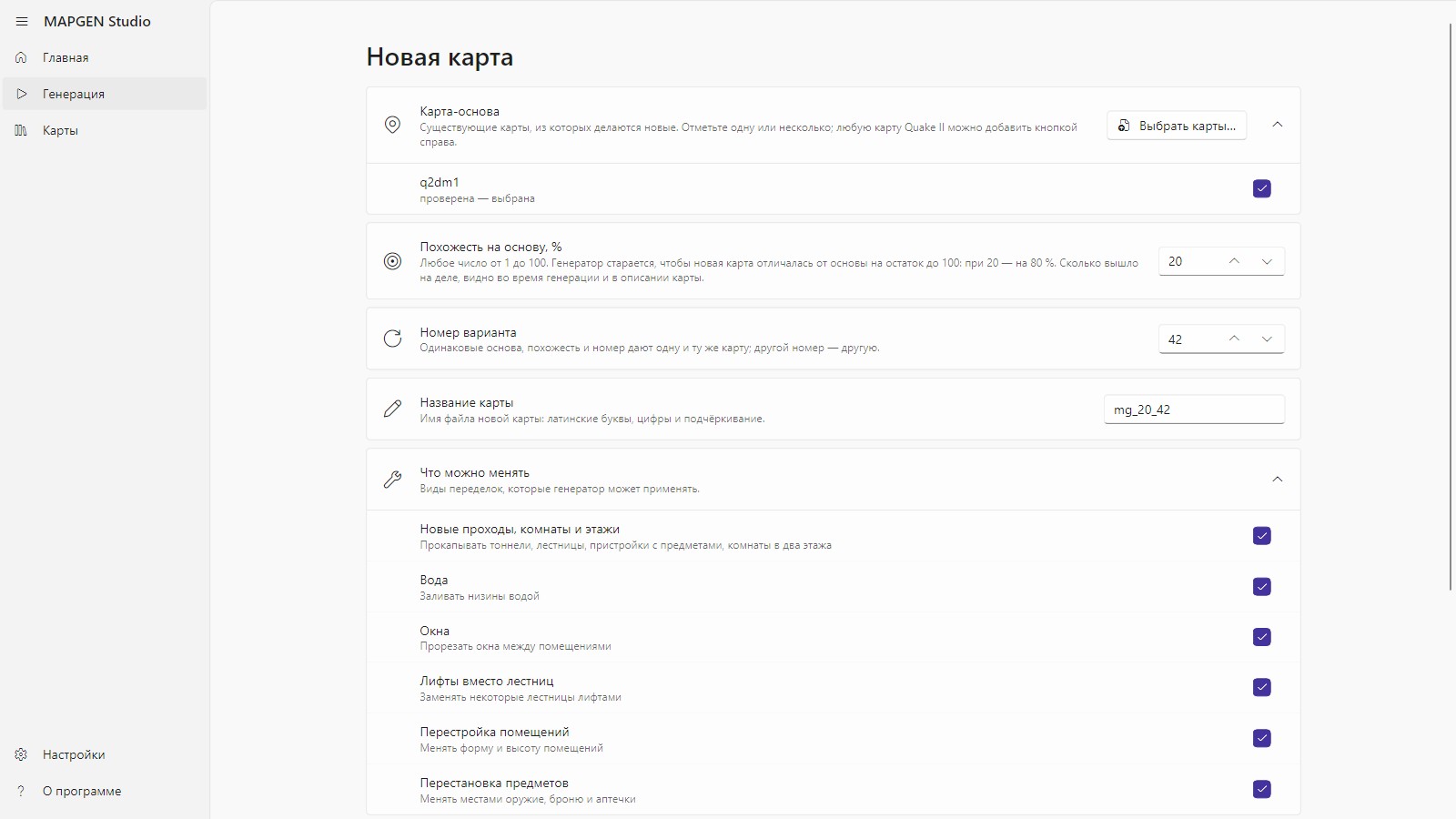
Analysing everything by hand was becoming harder. Mapgen Studio emerged as a separate application for maps: base layouts, donors, transitions, a library and checks. Bot Training Studio took on demos and geometry, analysis and training. Users would add recordings and obtain knowledge files. They would not need to rebuild the game library for every new map.
The model in Bot Training Studio works before a match. It can spend time analysing material on a GPU; the finished server bot must respond without that pause. Training was separated from execution. Model sizes were matched to available memory, with NVIDIA, AMD, Intel and a CPU fallback investigated. Readiness differed between options: seeing a device in a menu did not mean training, performance and results had been verified on it.
The studio's first launches brought down-to-earth problems. While Python was being checked, controls appeared and disappeared in the main window, and a single graphics card appeared several times in the list. Environment checking moved into the startup process. Libraries were included in the package, with installation of a compatible Python available when needed. Russian and English interfaces, hints, version history and updating followed.
Long-running tasks moved into the background: the window remained usable, jobs could be cancelled and exiting produced a warning. Indicators showed CPU, GPU and memory load. The factory model was separated from user additions; otherwise, an application update would overwrite hours of somebody else's training. Export began to account for data provenance and compatibility, while interrupted jobs retained their saved state.
A Teleport on a Graph
After q3t2 was accepted, its matches and separate trick recordings joined the training programme. A large coordinate jump on a graph might be a teleport, respawn, jump pad or recording gap. Mixing them would teach the model the wrong movement lesson. Events were therefore matched against trigger geometry, exit directions and subsequent states. The verified material included 64 full match recordings and 29 movement recordings. They showed not just where a person moved, but which mechanic made that movement possible.
Models were trained on NVIDIA and checked against held-out recordings. Some movement and transition measures improved. Related demos stayed on the same side of the dataset split: neighbouring frames from one match are too similar to count as an independent examination. Weapon choice, resource control and trick execution remained unresolved. On 10 October, the studio could already run training, but its results could not yet automatically produce a complete, strong duellist.
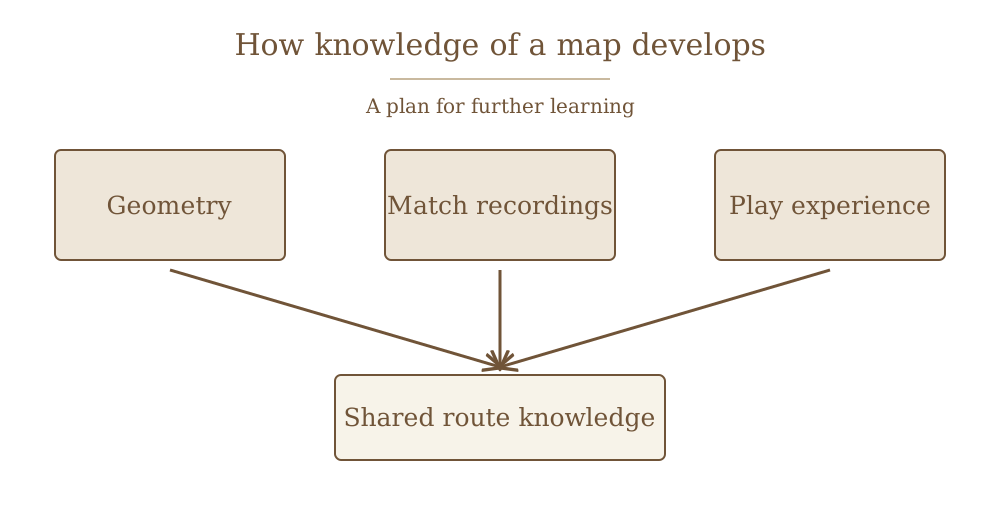
A baseline for unfamiliar maps was planned next. A bot would study routes and items during warmup, save a foundation shared by all profiles, then enrich it through matches. The studio would accept those files or start from geometry itself, with or without demos. A separate competition design proposed fixed conditions and comparisons between versions. At the book's cutoff, both remained plans.