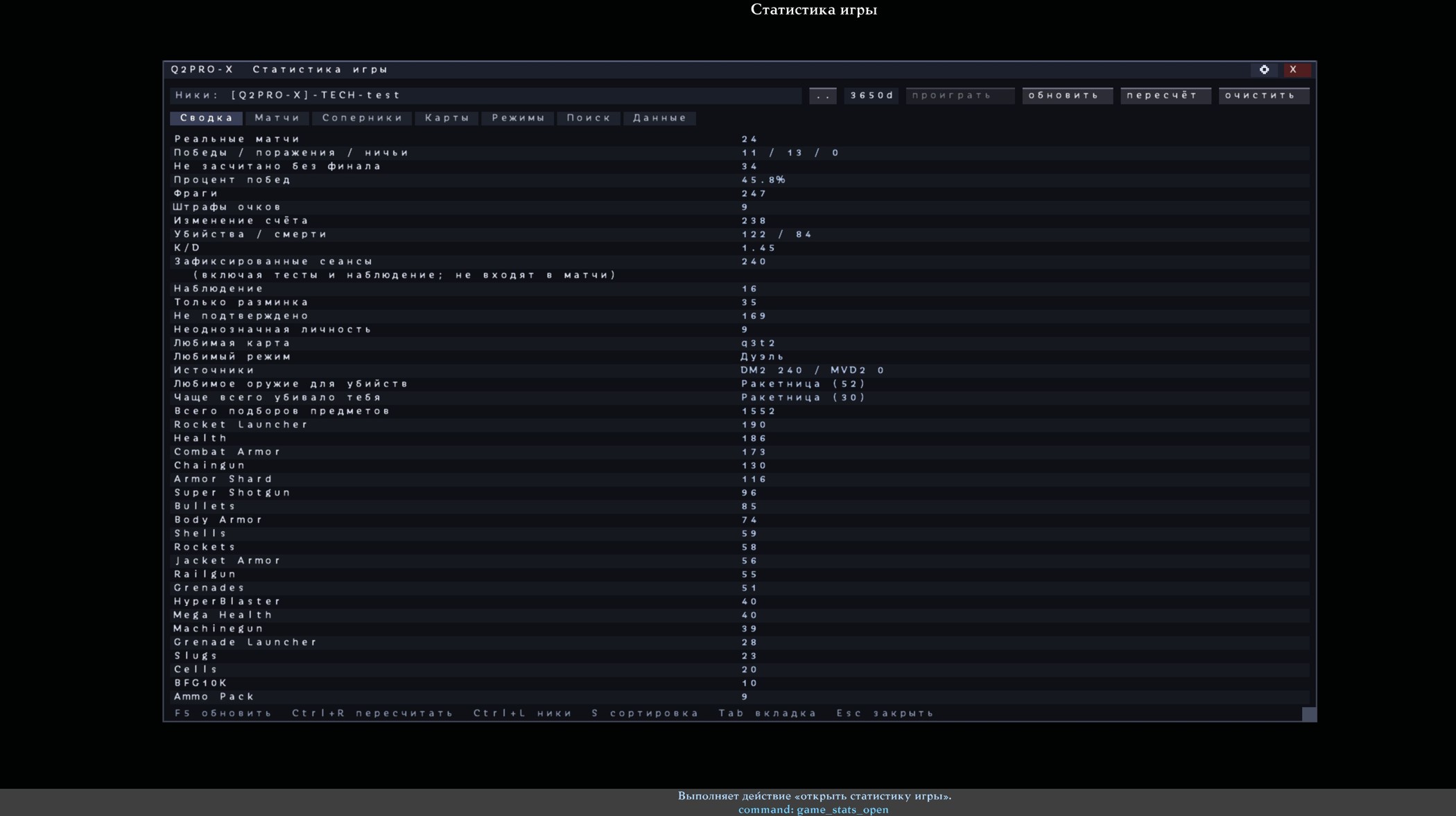
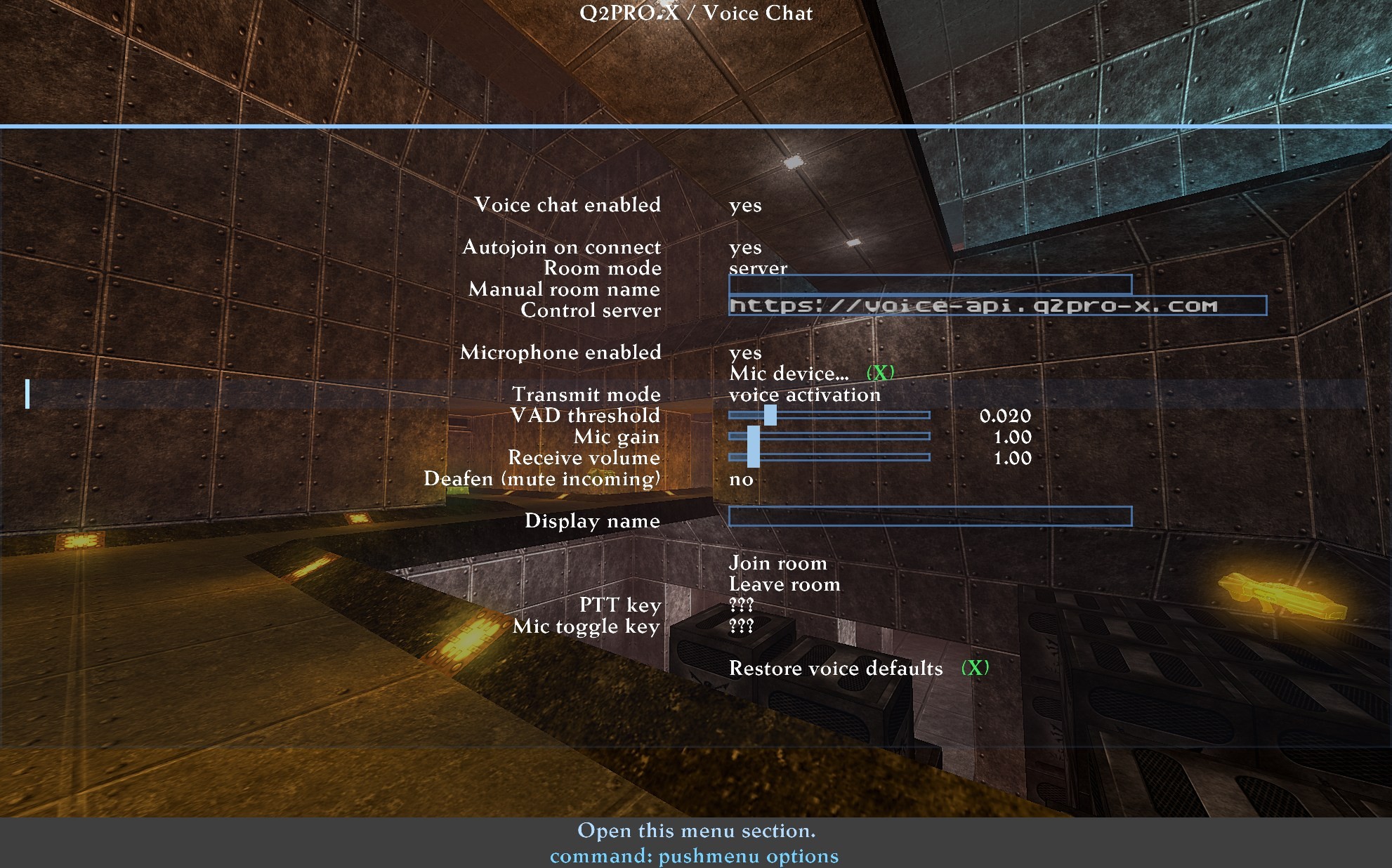
Voice chat appeared in the first working Q2PRO-X 1.2 builds on 18 April. Until then, a player under pressure had to type, use an external program or stay silent. The client gained microphone selection, push-to-talk and voice activation. Testing began with an ordinary question: could the participants hear each other? Then they changed devices, switched maps and reconnected—and found cases where the same settings no longer produced the same result.
Two connected clients revealed what a single-client experiment could not. Old state survived disconnection, settings updated incorrectly, and some microphones needed more volume range. Device selection, push-to-talk, voice activation, sensitivity and sound levels took shape. At the same time, a large media library had to fit into the user package without unnecessarily inflating the executable. Work continued until setting up a microphone no longer required knowledge of the voice system's internals.
Cyrillic also took several attempts. A character could exist in the font and still be hard to read at the chosen scale, fail to fit its cell or look out of place beside Latin letters. Search input and changing languages inside an open menu were checked separately. A clean configuration concealed some problems: they appeared only after switching display modes or returning from another window.
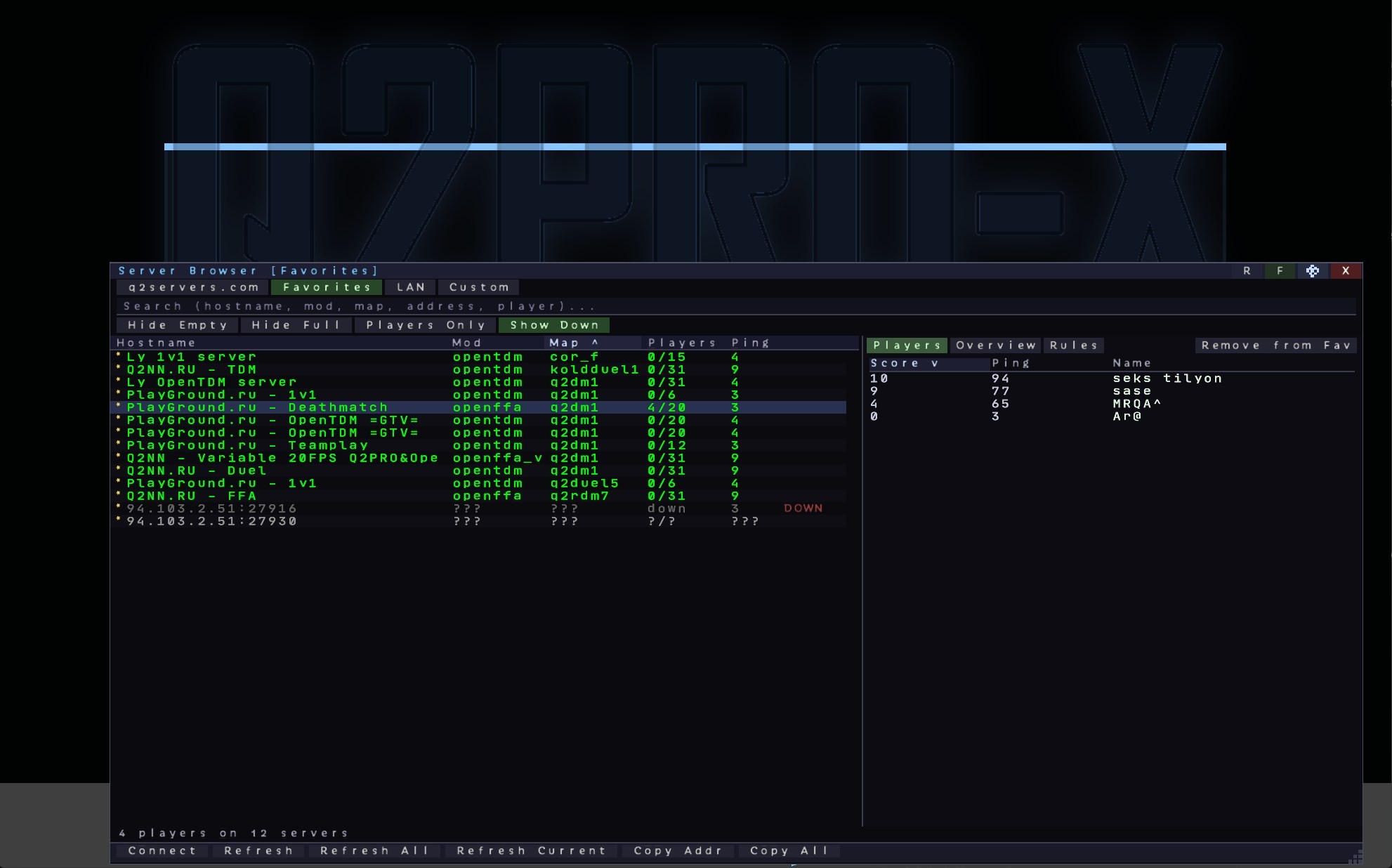
The server browser gained search, filters and favourites. Players wanted to keep server addresses and familiar configurations even while the interface changed. Local network-port selection was investigated separately: an unsuccessful attempt had to finish within a reasonable time. Otherwise, a player selected a server and stared at a motionless window, unable to tell whether the program was waiting for a reply or had stopped working.
In a dark corridor, an opponent's model could easily merge with the background. Strong highlighting solved that problem at the cost of another: the player became a flat patch of colour. Ways to preserve shape, texture and visibility together were explored. Team membership and the information actually available to the client had to be respected. Highlighting weapons on a map likewise relied on received item data. This work later extended to individual parts of models and newer graphics formats.
In the second half of April, returning to your own matches became easier. The demo library gained search, file information and playback controls. First-person weapons were restored in MVD viewing: server recordings contained different data from what the ordinary viewer expected. The missing view was reconstructed from available player information. The new controls now helped people understand a match, rather than merely skip through it faster.
Search and keyboard handling needed several more passes before those windows were finished. Some characters were rejected, events reached the wrong field and changing recordings could leave the wrong appearance behind. Demo-viewing settings were separated from live play; otherwise, someone could alter a recording's appearance, join a server and discover that their game had changed too. By the end of April, connecting, talking and reviewing matches were more convenient. The next work began with a question that had scarcely belonged to a client before: what would happen if rain fell over an old map?